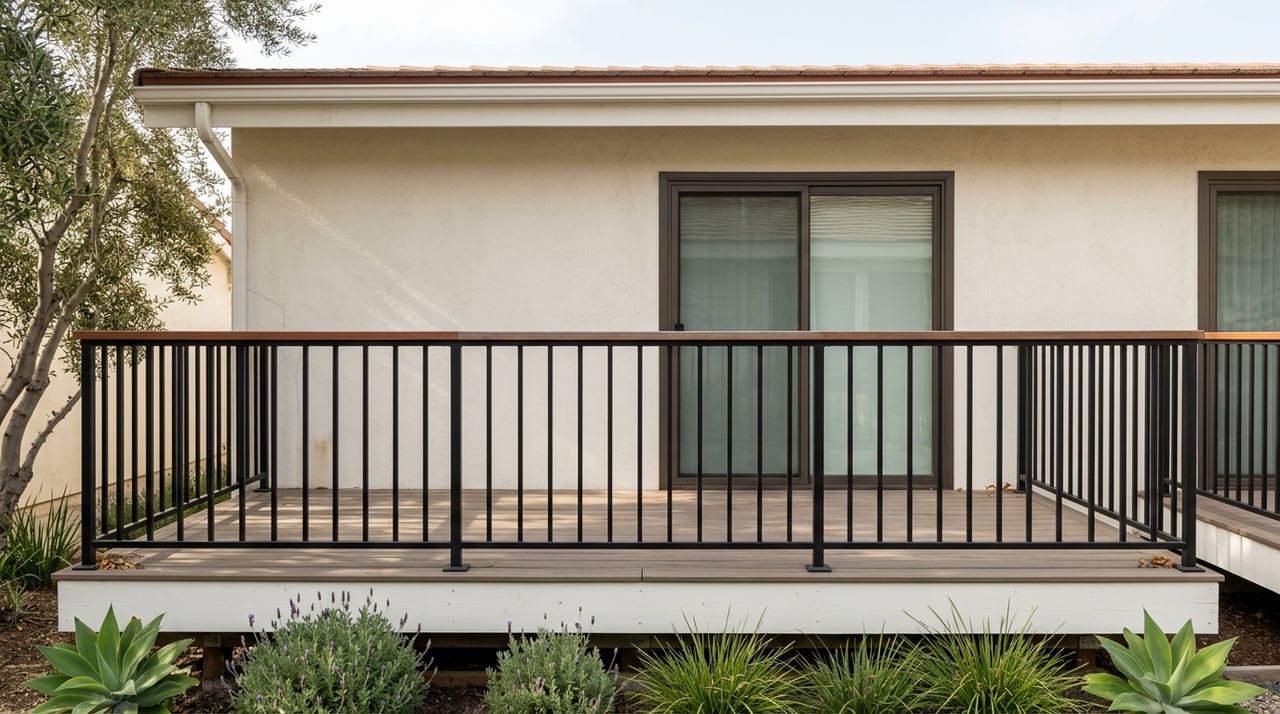
For as long as Newark's condo and townhome HOAs have existed, the report on the condition of a building's balconies and walkways lived in a filing cabinet at the property management office. A board member might pull it out before an annual meeting. A buyer's agent might ask for it if they happened to know to ask. Otherwise it stayed put, an internal document nobody outside the association ever saw.
That changed on January 1, 2026. Senate Bill 410 folded the report directly into the disclosure package every seller in a California condo or townhome sale must hand a buyer before contingencies come off. The report doesn't sit in a drawer anymore. It travels with the sale, and for Newark's HOA and condo communities, that shift may affect a buyer's financing options.
What Changed on January 1
Before this year, sellers in a common interest development delivered a standard disclosure packet under Civil Code section 4525: CC&Rs, budget, minutes, the usual stack. If the HOA had commissioned a balcony inspection under Senate Bill 326, a buyer could ask for it, and a lender's project questionnaire might surface it during underwriting. But nothing required the seller to include it up front.
SB 410, authored by Senator Grayson, closed that gap. Effective January 1, 2026, it amended Civil Code sections 4525, 4528, 5200, 5210, and 5551 to require that the most recent inspection report for a building's exterior elevated elements, meaning balconies, decks, stairways, and walkways more than six feet off the ground, ride inside the mandatory disclosure package itself. The law also made the report an official association record that has to be retained for two full inspection cycles and made available to members who ask.
The practical change is simple to state and easy to miss: a document that used to surface late in a transaction, if it surfaced at all, now shows up on day one.
The Deadline That Already Passed
SB 410 didn't create the inspection requirement. That came from SB 326 back in 2019, passed in response to a 2015 balcony collapse in Berkeley that killed six people and was traced to dry rot in wood framing nobody had inspected in years. SB 326 gave qualifying condominium associations, meaning buildings with three or more attached units and elevated wood-framed structures, until January 1, 2025 to complete a first inspection, with a repeat every nine years after that.
That deadline is well behind us. Any Newark HOA that hasn't ordered its inspection is already out of compliance, and until this year, that gap was mostly invisible to a buyer. There's no direct fine written into the statute for a late inspection, and no state agency actively audits HOAs for compliance. Starting this year, the absence of a report is itself a disclosure item, and a buyer's agent who knows the law will ask about it before writing an offer.
Why This Is a Lending Problem Before It's a Disclosure Problem
The part of this that catches sellers off guard isn't the paperwork. It's the financing.
Lenders selling loans to Fannie Mae or Freddie Mac review a condo project's status before approving a mortgage on any unit inside it. According to More Services, a building with a missing, overdue, or unfavorable SB 326 report can get flagged as non-warrantable, which knocks out conventional financing for that entire project, not just the unit being sold. A seller can have a clean unit, a motivated buyer, and a fair price, and still watch the loan fall apart because the building's paperwork isn't in order.
An HOA that hasn't ordered its inspection isn't just behind on a filing. That makes the HOA's inspection status a question worth asking before a sale is underway.
The timing makes this worse. A standard buyer contingency period in California runs about 17 days, but HOA document delivery follows its own separate clock, and if the association hasn't ordered its report yet, that clock can run into months rather than days. In the Bay Area, structural engineers qualified to perform SB 326 inspections were carrying backlogs of three to six months as of early 2026, according to guidance published for HOA boards. A seller who waits until an accepted offer to ask the HOA about its inspection status is asking a question that may not have an answer for a season.
| What it takes | Typical range |
|---|---|
| SB 326 inspection cost, 50-100 unit community | $15,000 to $40,000 |
| Bay Area structural engineer backlog (early 2026) | 3 to 6 months |
| Standard buyer contingency period | About 17 days |
| HOA record retention required under SB 410 | Two inspection cycles |
What This Looks Like Across Newark's HOA Communities
Newark counts roughly 14 registered HOA and condo communities in Alameda County records, in a county where the median monthly HOA fee runs around $442, according to a current directory of local associations. That mix includes straightforward single-family HOAs alongside attached-unit communities where SB 326 and SB 410 actually apply, since the law is specific to buildings with three or more attached units and qualifying elevated elements.
Names that come up in Newark's HOA landscape include Newpark Village, Cedar Lane, Mayhew Landing, Lexington Square, and Nantucket Cove, alongside townhome-style communities where units share exterior stairs and second-story decks, the exact structures SB 326 was written to cover. Newer construction adds to the mix too. Trumark Homes has been building Glass Bay in Newark, and any newly formed HOA there will eventually face the same nine-year inspection clock once the community matures past its initial warranty period.
Not every Newark HOA carries this exposure equally. A community built entirely of ground-floor units with no elevated walkways may fall outside SB 326's scope altogether. The only way to know for a specific building is to ask the board or management company directly, which is exactly the step that needs to happen before a listing goes live, not after.
Before You List: A Sequence That Protects Your Buyer Pool
- Contact the HOA or management company the day you decide to sell, not after you accept an offer. Ask directly whether an SB 326 inspection has been completed and request a copy.
- If no inspection exists, ask the board when one is scheduled. A three to six month wait for an engineer needs to be part of your listing timeline, not a surprise mid-escrow.
- Order the full section 4525 disclosure package as soon as you sign a listing agreement. Waiting for an accepted offer only pushes back the buyer's contingency removal date.
- Read the board minutes for any mention of upcoming special assessments tied to inspection findings. A report that flags repair work becomes a project the board has to fund, and that can affect what a buyer's lender is willing to underwrite.
- If the report shows anything short of a clean bill of health, put it in writing to prospective buyers early rather than letting it surface during their own inspection window.
A Few Direct Questions
Does this apply if I'm selling a single-family home in Newark? No. SB 326 and SB 410 apply specifically to condominium and common interest developments with three or more attached units and qualifying elevated wood-framed elements. A detached single-family home isn't covered by this law.
What if my HOA completed its inspection years ago? SB 410 requires associations to retain the two most recent inspection reports as official records, and the report that has to travel with a sale is the most recent one. If your HOA's last inspection predates the nine-year cycle, ask the board where it stands on scheduling the next one.
Is there a penalty if the HOA never did the inspection? The statute itself doesn't spell out a direct fine for a missed deadline. The consequences show up elsewhere instead, in lender scrutiny during underwriting, in insurance renewal conversations, and in a buyer pool that shrinks the moment a project gets flagged as non-warrantable.
Selling a condo or townhome in a Newark HOA now means selling the building's paperwork right alongside the unit. If you're weighing a listing and want to know exactly where your HOA stands before a buyer's lender finds out for you, Moni Shah can help you get the right questions in front of your board early, while there's still time to act on the answer. Let's talk, and let's get your home value conversation started before the disclosure clock does.
This article is general information, not legal, tax or financial advice. Consult a qualified professional about your situation.