Thinking about leaving Silicon Valley for more space and value without losing access to Peninsula and South Bay jobs? You are not alone. Many buyers are eyeing Union City for its central East Bay location, practical commute options and a housing mix that fits a range of budgets. In this guide, you will learn what the move really looks like: neighborhoods to target, how to commute to Palo Alto and San Jose, day-to-day conveniences and a step-by-step plan to relocate with confidence. Let’s dive in.
Why Union City appeals to Silicon Valley buyers
Union City sits in southern Alameda County between Hayward and Fremont, close to I-880 and the CA-84 Dumbarton Bridge, with the Union City BART/Intermodal station as a central hub. The setting gives you a direct path to the Peninsula through SR-84 and reliable regional rail and bus connections at the station. You can learn more about the city’s location and planning focus from the City’s resources for the Station District and related projects.
On affordability, the difference is real. Recent market snapshots show Union City’s median sale price around $1.3 million in early 2026, compared with higher medians on the Peninsula, especially Mountain View and Palo Alto. For longer-term context, federal survey data lists a median value of owner-occupied homes around $1.10 million in Union City. These figures help explain why many South Bay buyers consider moving east for more price flexibility. You can review population and owner-value baselines in the U.S. Census QuickFacts for Union City.
Commute expectations also matter. Union City’s mean travel time to work is about 31.9 minutes, based on U.S. Census estimates. Your door-to-door time will vary by route and departure window, so always test your exact commute during weekday peaks using mapping apps or transit planners.
Housing at a glance
What you will find
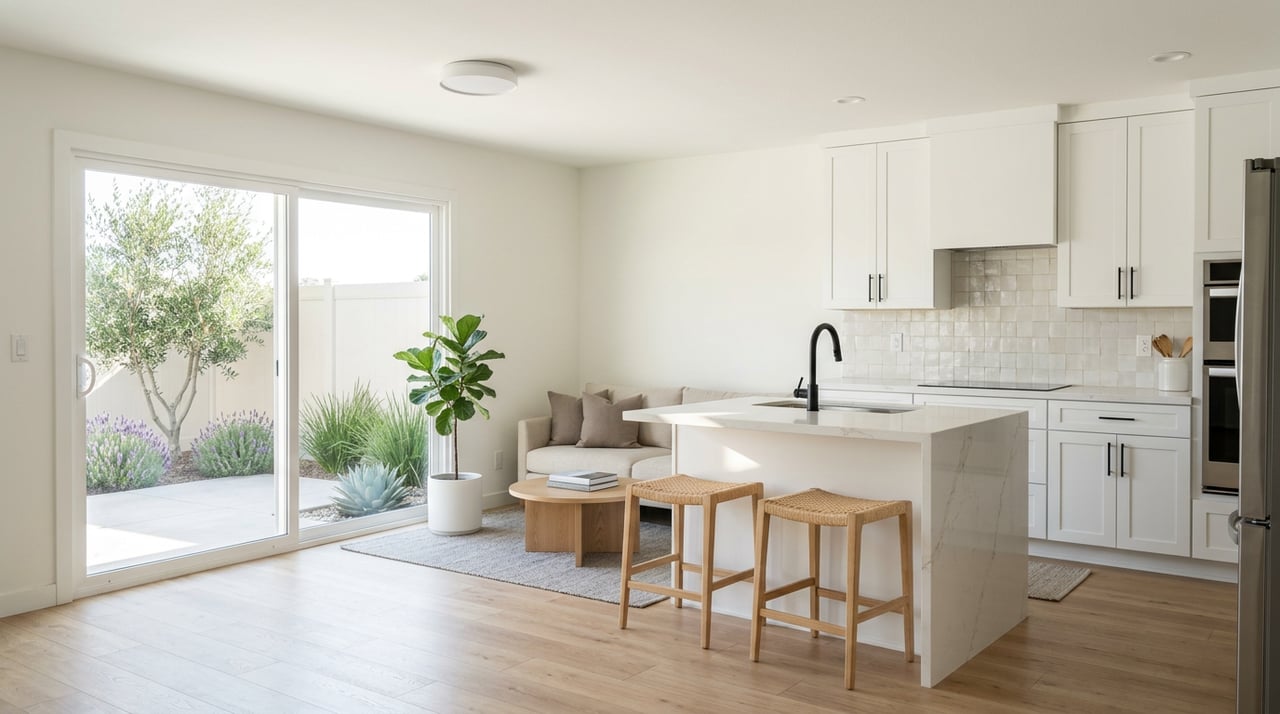
Union City is largely suburban. Many neighborhoods feature postwar and mid-century single-family homes, including ranch and split-level styles with modest yards and 2 to 3 bedrooms. Closer to the Union City BART station, you will see newer townhomes, low-rise condo buildings and other multifamily options shaped by the city’s Station District planning, which aims to concentrate higher-density housing and mixed-use near transit. You can explore the city’s Station District resources for an overview of that transit-oriented development vision.
Tradeoffs to expect
If you are moving from Palo Alto, Mountain View or core Peninsula markets, you will often find more square footage per dollar in Union City. The tradeoffs can include smaller lots than some South Bay suburbs, older finishes in mid-century homes and, for many Peninsula commutes, a reliance on car travel or timed bus and shuttle connections. Near BART, newer condos and townhomes prioritize transit convenience over large yards.
Timing and market rhythm
Market conditions move month to month. Early 2026 snapshots suggest some softening across parts of the Bay Area, which can open negotiation windows in certain price bands. Use broad city medians to gauge tone, then rely on a current comparative market analysis when you are ready to write an offer. A hyper-local read on days on market, list-to-sale ratios and competing inventory will guide your tactics.
Neighborhoods to target
Station District and BART area
Who it’s for: commuters who want rail or express-bus access and newer multifamily options.
The Station District around Union City BART is the city’s planned “downtown” node with a mix of higher-density housing near shops and services. The station itself is an intermodal point with BART, local bus connections and access to the Dumbarton Express. If you aim to minimize transfers, focus your search within roughly a half-mile of the station and review the city’s Station District resources to understand what is built and what is coming.
- Learn about station connections on the Union City station summary page.
- Use the BART schedules and trip planner to map your rail and transfer options.
Decoto and Alvarado corridors
Who it’s for: buyers who prefer single-family homes, established residential streets and nearby community retail.
Decoto and the Alvarado corridors include long-standing residential pockets with mid-century homes, local services and neighborhood conveniences. Expect older construction and plan for a thorough inspection and upgrade checklist when you evaluate properties. The historic Decoto area remains a recognizable local name with a residential feel.
- Read about the Decoto area’s background for local context.
Union Landing and retail convenience
Who it’s for: buyers who value weekend and evening conveniences close by.
Union Landing is the city’s largest shopping and entertainment hub with big-box retail, dining and a cinema just off I-880. While not a neighborhood in the classic sense, living within a short drive of this center can streamline errands and weekend plans.
- Explore the Union Landing directory to preview amenities.
Commute options for Peninsula and South Bay
Palo Alto, Menlo Park and Stanford
If your office is on the Peninsula, the Dumbarton Express is the most practical transit option from Union City. The DB and DB1 routes connect the Union City BART area and Ardenwood Park & Ride to stops in Menlo Park, Palo Alto and Stanford on a scheduled commuter timetable. Many riders pair a short drive or BART hop to the bus, then finish the last mile with a campus or employer shuttle. Service levels and departure times matter, so check current timetables before you rely on it daily.
- Review Dumbarton Express routes and schedules.
Mountain View, Sunnyvale and North San Jose
There is no direct Caltrain or commuter rail from Union City. For these job centers, most commuters drive via I-880 to US-101. Multi-leg transit is possible but often slower and transfer-dependent. One common path is BART to Berryessa/North San Jose with a VTA connection or employer shuttle to your campus. Always compare door-to-door times with real-time planners to decide if transit or driving fits your routine.
- Use BART’s trip planner to time the BART leg of your route.
San Jose Diridon and downtown
There is not a one-seat BART ride from Union City to Diridon Station. Typical choices are to drive I-880 or pair BART to Berryessa with a VTA or Caltrain transfer. If your schedule is flexible, off-peak drives can be significantly faster than peak periods, so test both windows.
Traffic today and projects to watch
The Dumbarton Bridge corridor is a known congestion point. Regional agencies are working on targeted bus and operations improvements through the Dumbarton Forward initiative, with long-term rail concepts still under study and dependent on funding and permits. Union City’s Station District positions the area as a future regional hub if additional rail integrations move forward.
- Read about corridor improvements in Dumbarton Forward.
- Explore the city’s Station District resources to see how future mobility fits into local planning.
Day-to-day life and amenities
Schools and enrollment basics
Union City is served by New Haven Unified School District. James Logan High School is the primary comprehensive high school in the area. Because attendance boundaries and program options can change, confirm your address with the district, review state and district dashboards and visit schools in person to understand offerings and enrollment timelines. Use neutral data and firsthand visits to guide your decisions.
Shopping and services
Union Landing anchors big-box retail, dining and entertainment for the city. Beyond that, everyday services are distributed along the Alvarado-Niles and Decoto corridors, including groceries, pharmacies and casual restaurants. During your scouting trip, make a loop through these corridors at the times you typically shop to see how parking and traffic feel.
- Preview stores and restaurants at Union Landing.
Healthcare and clinics
You will find primary care and outpatient clinics in Union City. For major hospital services, many residents use facilities in nearby cities. Local profiles note the availability of multiple clinic providers within city limits, so check insurance networks and proximity during your search.
Parks and outdoors
Union City is improving trail and bike connectivity through projects like the Quarry Lakes Parkway, which aims to link neighborhoods with regional parks and multi-use paths. Nearby regional recreation areas, including Quarry Lakes and Coyote Hills in adjacent cities, offer scenic loops for walking, biking and birdwatching.
- Learn about the Quarry Lakes Parkway Project for future connectivity.
Your relocation game plan
Scout smart
Plan two visits before you buy:
- Weekday peak test. Drive your exact route during a weekday morning or evening peak. If you plan to use transit, ride BART and transfer to the Dumbarton Express at the same time you would commute. Check parking availability at Union City BART early in the morning.
- Weekend living test. Visit on a Saturday or Sunday. Explore Union Landing, grocery stores and local parks, and time common errands.
Use official planners to get accurate schedules for your test runs:
- Check BART schedules and trip planning tools.
- Review Dumbarton Express commuter routes.
Narrow your search
Use these filters to focus quickly:
- Transit-first living. Target properties within about 0.5 miles of Union City BART in the Station District or nearby blocks. Start with the city’s Station District resources to understand current and planned housing.
- Single-family focus. Look in established pockets along the Decoto and Alvarado corridors for mid-century homes with yards. Expect to budget for updates if finishes are original.
- School-driven search. Confirm attendance boundaries directly with New Haven Unified, preview public dashboards and schedule campus tours. Policies and programs can change from year to year.
Time your purchase
- Read the room. Early 2026 market signals suggest potential leverage in some price bands. Pair any citywide median you see with a live comparative market analysis for the specific property type and price range you want.
- Plan your bridge. If you need to start a new role quickly, consider a short-term rental near Union Landing or in the South Bay while you shop. If you are selling first in Silicon Valley, model your net proceeds, storage costs and any rent-back to keep your move timeline smooth.
- Leverage local help. A neighborhood-focused agent can coordinate remote tours, structure a competitive but measured offer and negotiate inspection items common to local mid-century homes.
Ready to explore Union City with a local who understands the cross-bay tradeoffs and the neighborhoods block by block? Reach out to Moni Shah to set up a relocation consult, preview listings and map your exact commute. You can get support in English, Hindi, Punjabi or Urdu.
FAQs
Is Union City more affordable than Palo Alto for buyers?
- Yes. Recent snapshots show a median sale price around $1.3 million in Union City in early 2026, compared with much higher medians in Mountain View and Palo Alto. Always check current data before you tour.
How long is the Union City to Palo Alto commute?
- It depends on your mode and departure time. The U.S. Census lists a 31.9-minute mean commute for Union City overall, but peak drive times can be much longer. The Dumbarton Express is the primary transit option for Menlo Park, Palo Alto and Stanford riders.
Which Union City neighborhoods are best for BART access?
- Focus within about a half-mile of Union City BART in and around the Station District, where transit-oriented housing is planned and built. Review the city’s Station District resources to see current and upcoming options.
Do I need a car if I work in Mountain View or Sunnyvale?
- For many workers in North San Jose, Sunnyvale and Mountain View, driving via I-880 and US-101 is the most direct option. BART to Berryessa with VTA or employer shuttles can work but is often slower and transfer-dependent.
What kinds of homes are common in Union City?
- You will find many postwar single-family ranch and split-level homes, plus newer condos and townhomes near the BART station. The Station District planning emphasizes higher-density housing close to transit for convenience.
U.S. Census QuickFacts: Union City
Union City Station District resources
Union City BART station overview
BART schedules and trip planner
Dumbarton Express (DB/DB1) commuter routes