Wondering why some Hayward condos sit while others get serious attention faster? In a market where condo buyers often compare value, condition, HOA costs, and amenities side by side, the way you prepare your home can shape both interest and offers. If you are getting your Hayward condo ready to list, a smart plan can help you present the home clearly, answer buyer questions early, and avoid delays once negotiations begin. Let’s dive in.
Understand the Hayward condo market
Hayward has a meaningful attached-home market. City and Census-based data show that about 33% of Hayward housing units are multifamily, and the owner-occupied housing rate is 58.0% for 2020 through 2024. That matters because condo buyers in Hayward are not shopping in a vacuum. They are often comparing several similar options at once.
Current Redfin condo data shows 59 condos for sale in Hayward at a median listing price of $475,000. The same data shows most Hayward homes for sale staying on the market 83 days and receiving 1 offer, while Redfin’s broader Hayward market page shows all home types selling at a median price of $884,471 and going pending in about 17 days on average. For you as a seller, that means condo buyers may be especially focused on price, presentation, and HOA value.
Focus on space and simplicity
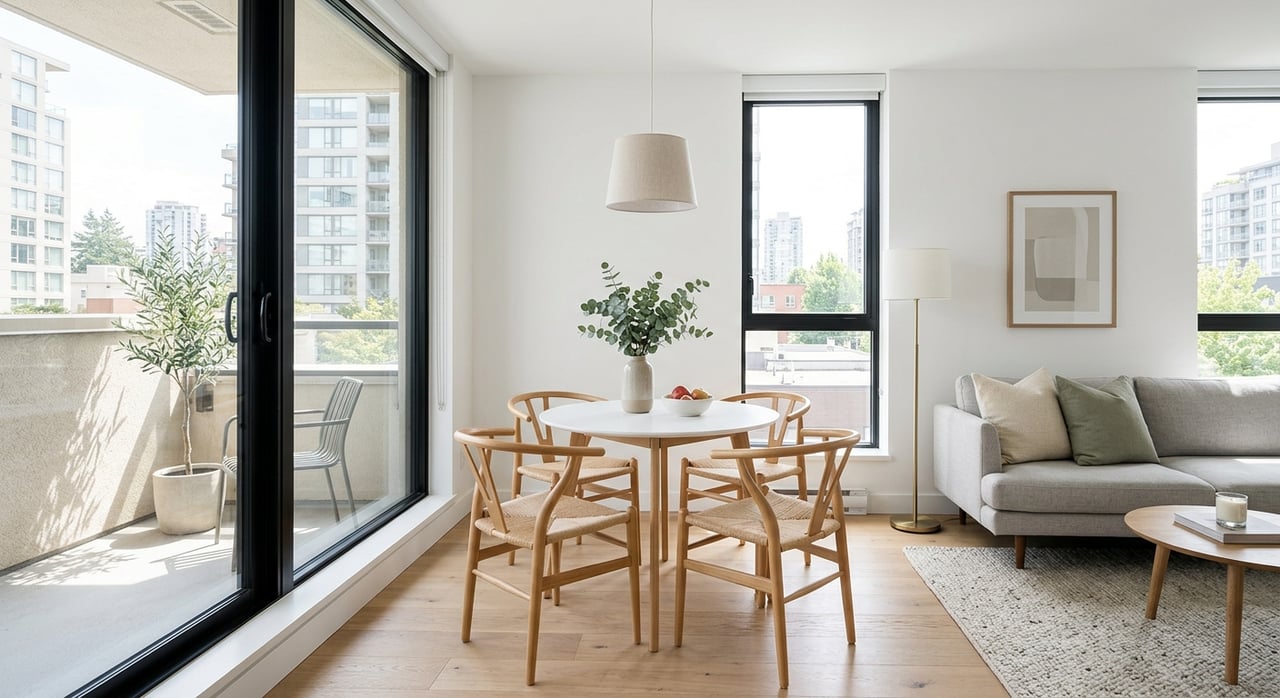
With condos, prep is usually less about major remodeling and more about making the home feel open, functional, and easy to picture living in. The strongest payoff often comes from decluttering, simplifying, and styling each room so buyers can understand the layout right away. This is especially important when square footage is limited.
National staging research included in the report supports that approach. NAR found that 83% of buyers’ agents say staging makes it easier for buyers to visualize a property as a future home. The same research found that the living room is the most important staging area, and many sellers’ agents reported that staging helped reduce time on market.
Start with the living room
Your living room often does the hardest work in a condo. It needs to show comfort, function, and flow without feeling crowded. If the room has too much furniture, oversized décor, or visible storage overflow, it can make the entire home feel smaller.
Keep only the pieces that define the room’s use. A sofa, a simple coffee table, and a clean media setup are often enough. If possible, create visible walking space and let natural light do more of the work.
Clear surfaces and storage areas
Buyers notice clutter fast, especially in kitchens, bathrooms, and entryways. Clear countertops, reduce open-shelf items, and remove extra toiletries, cords, and paperwork. Closets also matter because buyers often check storage more closely in condos than in larger homes.
A good rule is to edit more than you think you need to. When cabinets and closets look organized and partly open, they feel more usable. That can make the whole unit read as more efficient.
Brighten the home
Current Hayward condo listings often highlight updated lighting, vaulted ceilings, balconies, dual sinks, secure parking, and community amenities. That suggests buyers are responding to features that improve daily living and make a condo feel more comfortable and practical. Your job is to make those features easy to see in person and in photos.
Replace burned-out bulbs, open window coverings, and use matching light temperatures where possible. If your condo has a good ceiling height, a bright corner, or a private outdoor nook, make that feature visually obvious. Small advantages matter.
Highlight condo-specific lifestyle features
Condo buyers are often buying a combination of unit features and shared-community benefits. That means your prep should go beyond the walls of the unit. You want buyers to understand not just the home itself, but also how the property supports everyday life.
Make the balcony or patio count
If your condo has a small balcony or patio, treat it like a real feature, not an afterthought. Clean the flooring, remove stored items, and add only minimal furniture if it fits comfortably. Even a compact outdoor area can help buyers imagine morning coffee, fresh air, or a little extra breathing room.
Show parking and convenience
If your unit includes secure under-building parking or another assigned parking benefit, make sure that information is easy to confirm and present clearly. Buyers often weigh convenience heavily, especially when comparing similar units. If parking, storage, or access is a strong point, it should not get lost in the shuffle.
Present amenities accurately
Community amenities can add value, but they should be described clearly and factually. If the HOA offers shared features, make sure you know what is currently available and how those amenities are maintained. Buyers will usually connect those benefits directly to HOA dues and overall value.
Get ahead of HOA documents
One of the biggest differences between listing a condo and listing a detached home is the HOA paperwork. In California, condo sellers must provide a substantial document package under Civil Code section 4525. That package can include governing documents, the most recent annual budget and reserve materials, statements of current and unpaid assessments, notices of unresolved violations, rental or leasing prohibition information, and, if requested, the last 12 months of approved board minutes and the most recent inspection report.
This is not something to leave until the last minute. Under Civil Code section 4530, once a written request is made, the association must provide the requested documents within 10 days, and it may charge a reasonable fee based on actual cost. In practice, that means you should request the HOA package early so you are not scrambling once a buyer is in the picture.
What to gather early
Before your condo goes live, it helps to organize:
- HOA governing documents
- Current monthly HOA dues information
- Most recent annual budget report
- Reserve summary and reserve funding plan
- Information about any unpaid assessments or balances
- Notices of unresolved violations, if any
- Rental or leasing restriction statement
- Approved board minutes from the last 12 months, if requested
- Most recent inspection report, if available through the statutory package
Having these items ready can make your listing feel more organized and credible. It also helps your agent answer buyer questions faster.
Be ready for buyer questions
Hayward condo buyers often want answers before they feel comfortable writing an offer. In many cases, the most important questions are about ongoing cost and future risk, not just finishes and square footage. The good news is that California’s required condo disclosures already point you toward the issues that matter most.
Expect questions about HOA dues and assessments
Buyers commonly ask about monthly HOA dues, whether a special assessment may be coming, and whether reserves appear adequately funded. Those concerns tie directly to the annual budget materials required under California law. If you can present this information clearly, you reduce uncertainty and help buyers make decisions with more confidence.
Expect financing questions
Civil Code section 5300 says the annual budget report for condominiums must disclose whether the project is FHA-approved and whether it is VA-approved. That can affect financing options for some buyers and can influence how broad your buyer pool is. If your HOA documents address this, it is helpful to know that status before listing.
Expect questions about rules and rentals
If your condo may appeal to investor buyers, rental flexibility can be a major topic. California requires disclosure of any rental or leasing prohibition in the governing documents. That means you should never assume a unit can be rented without checking the HOA rules first.
Expect questions about minutes and maintenance
Board minutes and unresolved notices can reveal recurring maintenance issues, enforcement matters, or planning for future projects. Since buyers may request the last 12 months of approved board minutes, you should assume informed buyers will review them carefully. It is better to understand what is in the file now than be surprised later.
Align your unit disclosures
California’s Department of Real Estate states that buyers are entitled to a Transfer Disclosure Statement and an Agency Relationship Disclosure. The Transfer Disclosure Statement addresses the property’s physical condition, hazards or defects, and other factors that can affect value or desirability, including taxes and assessments. For condo sellers, that means your unit-condition disclosures and HOA paperwork should tell a consistent story.
If there has been a repair, an ongoing issue, or a known notice involving the unit, it is important to address it accurately and early. Consistency builds trust. It also lowers the chance of confusion during escrow.
Use a smart pre-listing checklist
A clear checklist can keep your prep focused and manageable. Instead of trying to do everything at once, handle the items that most affect buyer perception and transaction readiness.
Hayward condo listing prep checklist
- Declutter every room
- Simplify furniture layout
- Deep clean the kitchen and bathrooms
- Brighten lighting and open window coverings
- Clean and stage the balcony or patio
- Confirm parking and storage details
- Gather HOA documents early
- Review budget, reserves, and assessment information
- Confirm rental restriction language
- Review recent board minutes if available
- Complete seller disclosures carefully
- Make sure your listing photos capture the condo’s best lifestyle features
Why strategy matters more for condos
In Hayward, condo buyers are often balancing affordability, monthly costs, financing options, and lifestyle tradeoffs. That means they may take a closer look at details that detached-home buyers sometimes treat as secondary. A well-prepared condo can stand out by removing doubt and making value easier to understand.
The goal is not to make your home look flashy. The goal is to make it feel clean, bright, well-managed, and easy to say yes to. When your pricing, presentation, and paperwork all work together, you give your listing the best chance to connect with the right buyer.
If you are thinking about selling your condo in Hayward, the right guidance can make prep feel much more manageable. Moni Shah can help you create a listing plan, prepare your home for the market, and position it clearly for today’s East Bay buyers.
FAQs
What should you do first when preparing a Hayward condo to list?
- Start by decluttering, simplifying the layout, and requesting your HOA documents early so you can prepare both the home and the paperwork at the same time.
Why do HOA documents matter when selling a condo in Hayward?
- California law requires condo sellers to provide key HOA documents, and buyers often review them closely for dues, reserves, rules, possible assessments, and unresolved issues.
What rooms matter most when staging a Hayward condo for sale?
- The living room is especially important because staging research shows it is the area buyers respond to most when trying to picture themselves in the home.
What buyer questions should a Hayward condo seller expect?
- You should expect questions about monthly HOA dues, reserve funding, special assessments, rental restrictions, unresolved violations, parking, and FHA or VA approval status if disclosed in the HOA materials.
Can you market a Hayward condo as rentable?
- Only if the HOA rules allow it, because California requires disclosure of any rental or leasing prohibition in the governing documents.
How early should you request HOA documents for a Hayward condo sale?
- As early as possible, since California law gives the association 10 days after a written request to provide the required documents.